A common mistake.
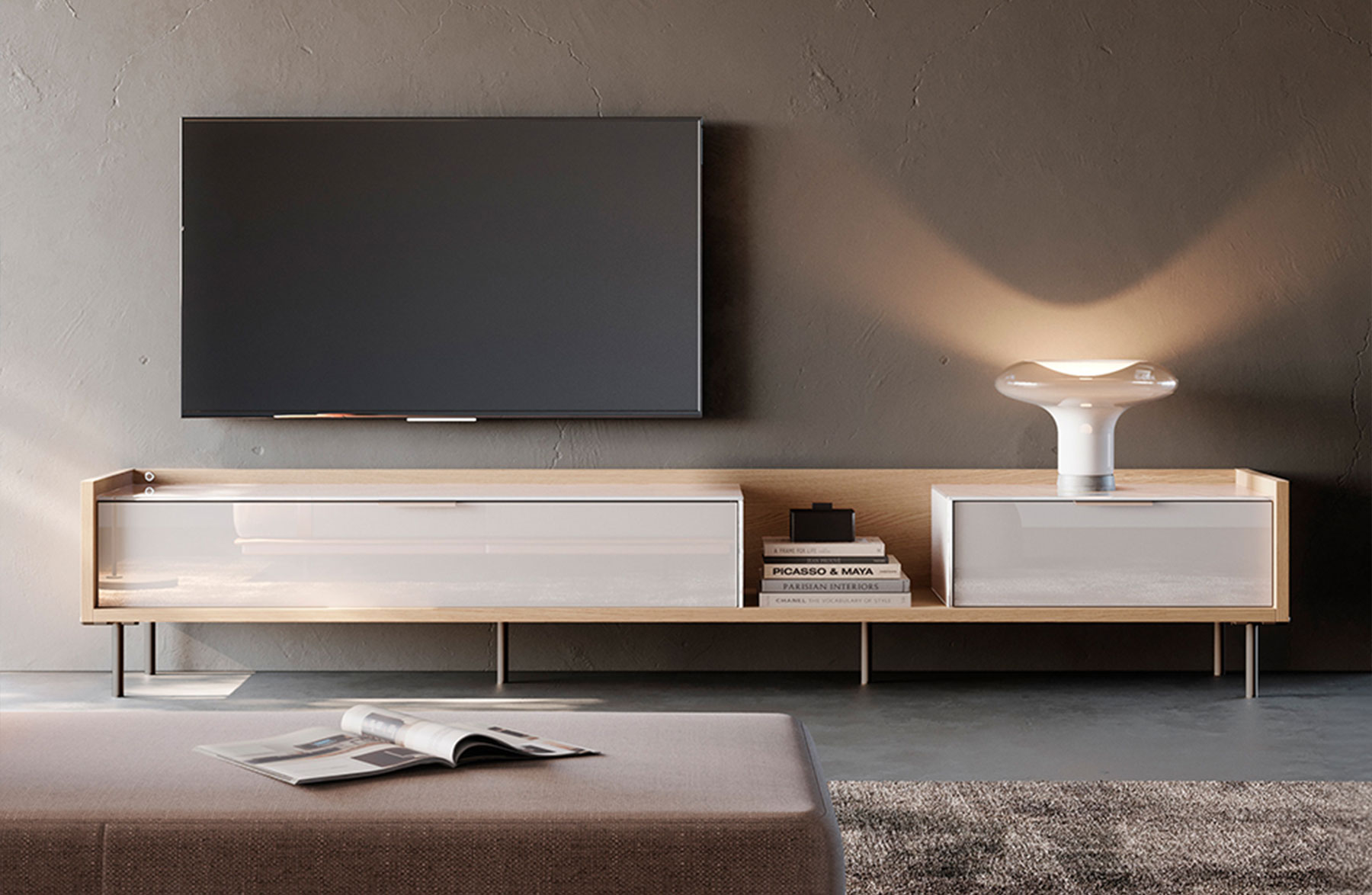
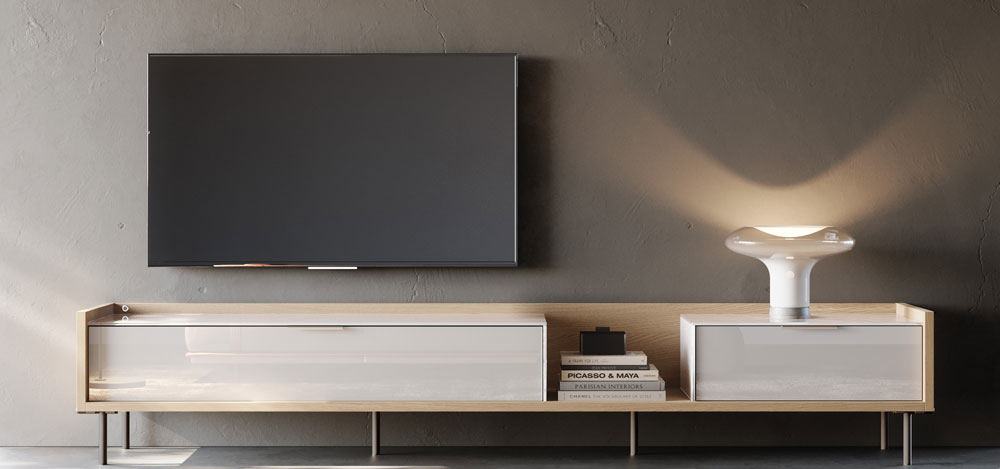
The cabinet is not a simple support, but an active part of the system: it influences the sound output, the visual order, the ease of use and the longevity of the entire system.
In this article, we’ll see how to truly choose a home theater cabinet with an integrated soundbar, avoiding compromises that often emerge only after installation.
Why cabinets are central to a home theater system
A modern home theater system isn’t just a screen and a sound system. Surrounding the TV are decoders, consoles, players, connections, power supplies, and heat management.
If the furniture is not designed with these elements in mind, the risk is twofold: a messy aesthetic result and practical problems that emerge over time.
The right furniture doesn’t just hide technology: it organizes it.
Built-in or freestanding soundbar? The real differences
Many soundbars simply sit on top of or in front of the TV stand. This is a quick, but often temporary, solution.
A soundbar integrated into the cabinet improves visual order, reduces clutter and overlaps, but requires proper design, especially on the acoustic front.
The characteristics of a good home theater cabinet
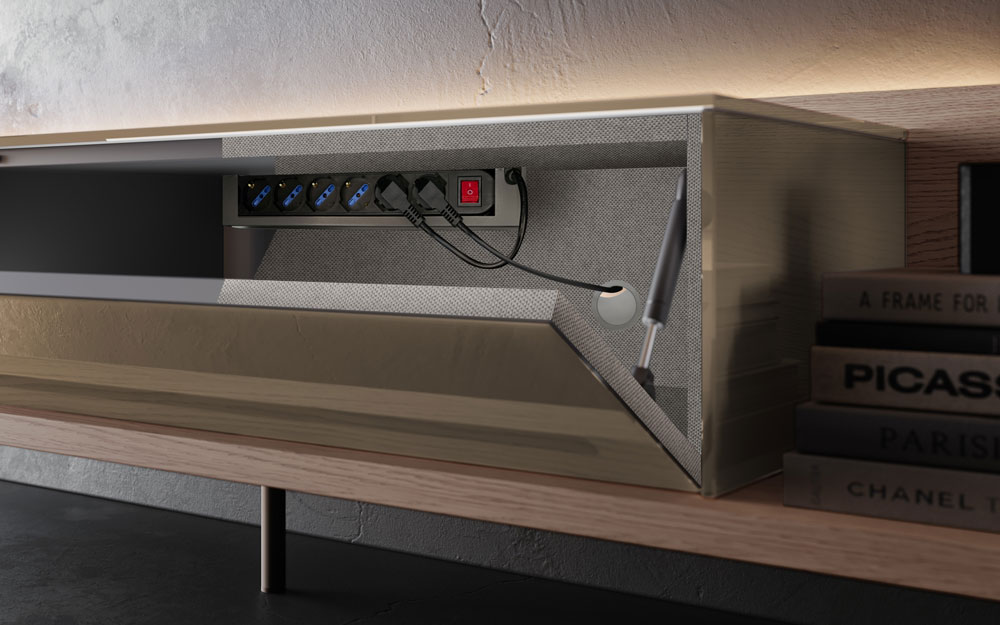
- Cable and connection management
- Accessibility over time
- Ventilation and heat dissipation
- Correct space for audio and subwoofer
- Stability and materials
- Doors made of technical acoustic fabric allow sound to pass through, protect devices, and maintain visual order. When coordinated with the cabinet finish, they combine functionality and aesthetics.
The most common mistakes when choosing a home theater cabinet
Soundbars closed behind traditional doors, compartments that are too narrow, lack of ventilation, difficult access and uncontrolled cables are common mistakes that compromise the final result.
Aesthetics and performance: can you have it all?
When it makes sense to choose a piece of furniture designed for Home Cinema
When the TV is used on a daily basis, audio is central and you want to avoid future compromises.