Try this. Walk into the living room and see where your gaze goes first. Then see where your guests’ gazes go. Then consider the orientation of the sofa, the position of the armchairs, and how the light is distributed.
The TV entered the living room as a temporary guest. And it never left.
For decades, the television was a bulky object that people tried to hide or at least integrate. Then came the flat panel, the ultra-slim screen, and the idea that the TV could almost be a painting.
The problem is that a painting doesn’t emit artificial light, has no cables sticking out from the bottom, and doesn’t carry a soundbar, cable box, game console, or other devices.
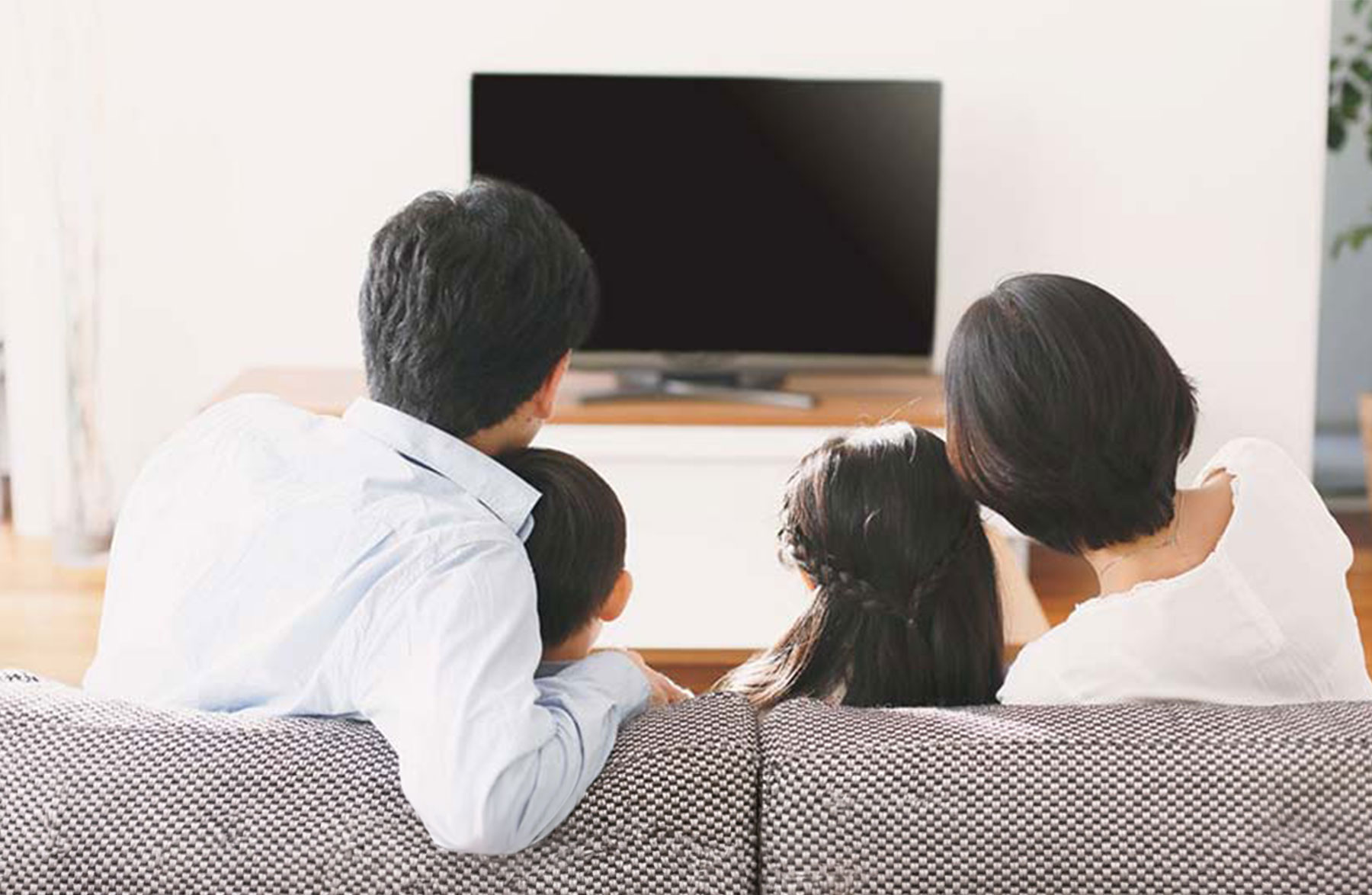
The result : the living room is organized around the TV when it’s off almost as much as it is around the TV when it’s on. The wall with the screen becomes the permanent focal point of the living room, even when you’re not watching anything.
The same desire always emerges from furniture and home theater forums: to make the TV disappear when it’s not needed. Not to physically hide it, but to reduce its visual presence.
The first: incorrect proportions. A cabinet that’s too low compared to the TV creates an immediate visual imbalance. A cabinet that’s too short at the sides leaves the TV protruding at the sides.
Second: build quality. Online reviews often highlight the same problem: the cabinet wobbles. Wheels give way, bases buckle under the weight of modern TVs.
There’s an approach to TV cabinets that can’t be discussed enough: reducing the visual perception of the screen when it’s off.
It’s not about special mechanisms or doors. It’s about proportions, materials, and design.
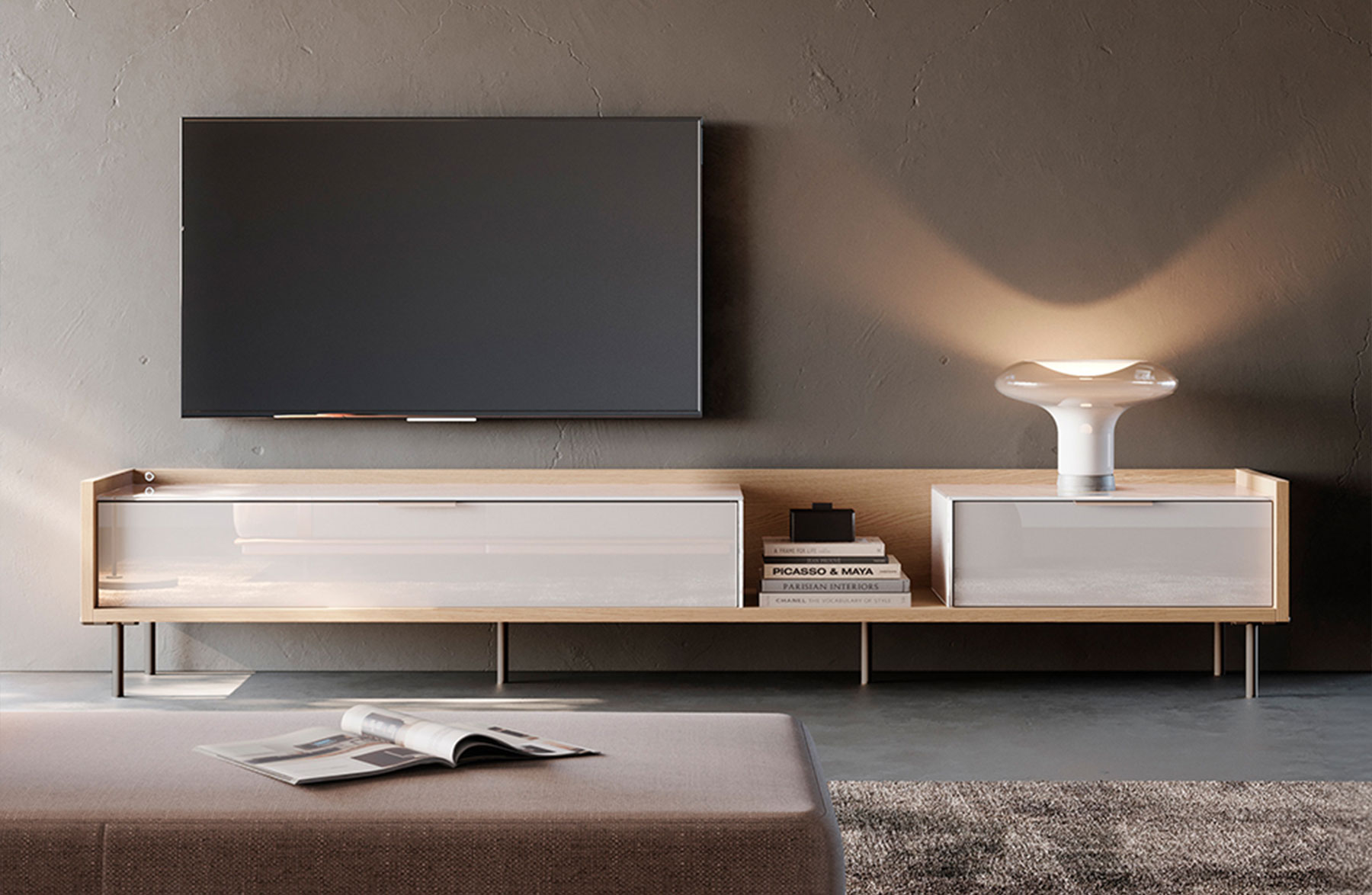
When the length of the cabinet is calibrated to the diagonal of the TV, when the finishes create continuity with the screen, and when the height is the right one for the eye when seated, the TV ceases to be a cumbersome object.
Munari’s HUG and VITAE collections are born from this logic. The available widths—125, 150, 175, and 200 cm—are calibrated to the actual diagonals of current TVs.
The Active Door glass doors let the remote control signal pass through without opening. The devices remain hidden but fully functional. The structure is designed to support loads of up to 100 kg, with integrated ventilation systems.
Three things, in order of importance.
The proportions of the cabinet relative to the TV and the wall. Don’t choose the cabinet just for the screen you have today.
The structural quality. 77” OLED TVs weigh 30-35 kg and 85” LEDs weigh over 40 kg.
The consistency between cabinet and wall. A TV cabinet lives within a composition.
The living room can revolve around something better than an unlit screen. Start with the furniture, not the screen.
Discover Munari Collections