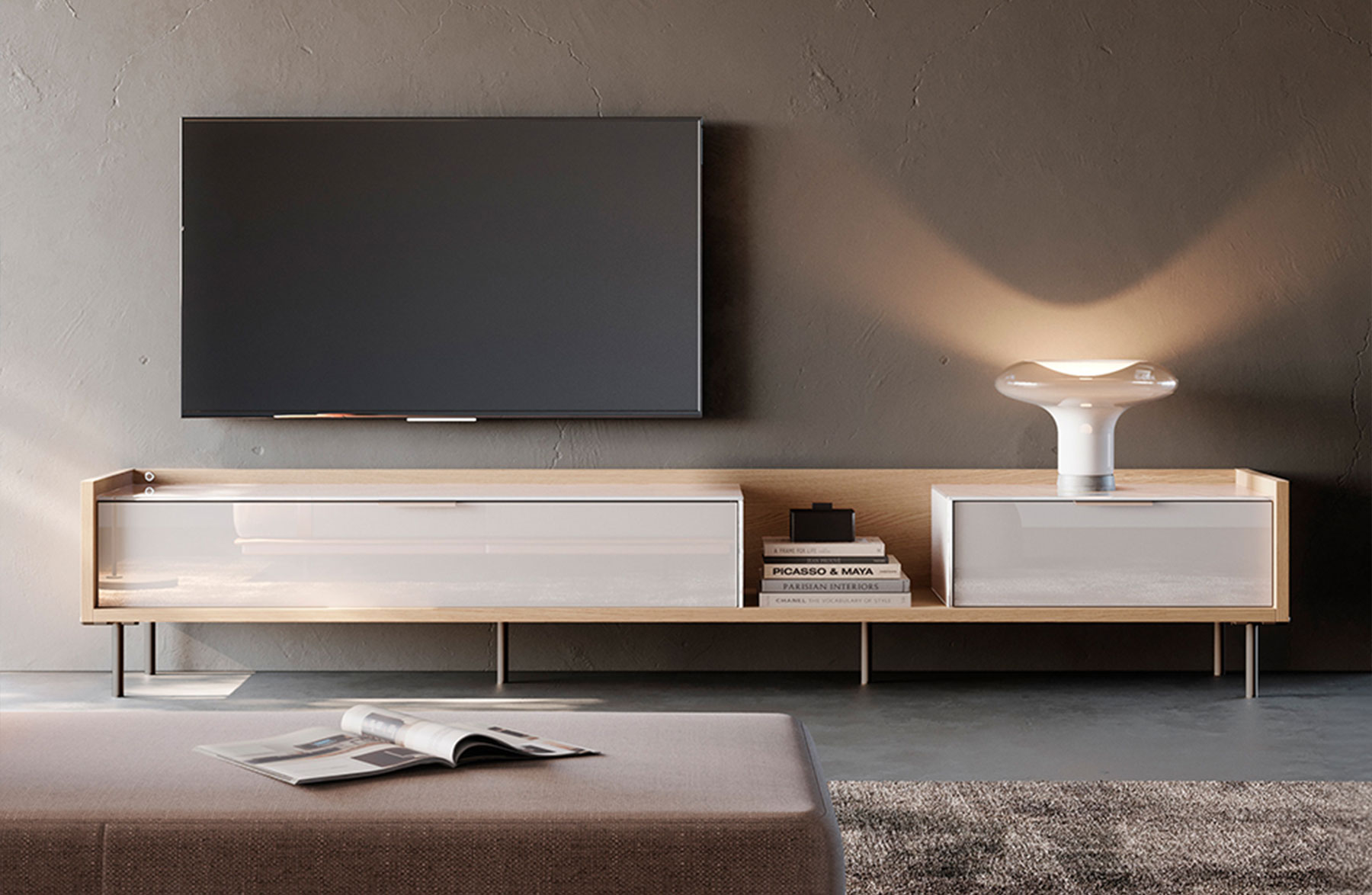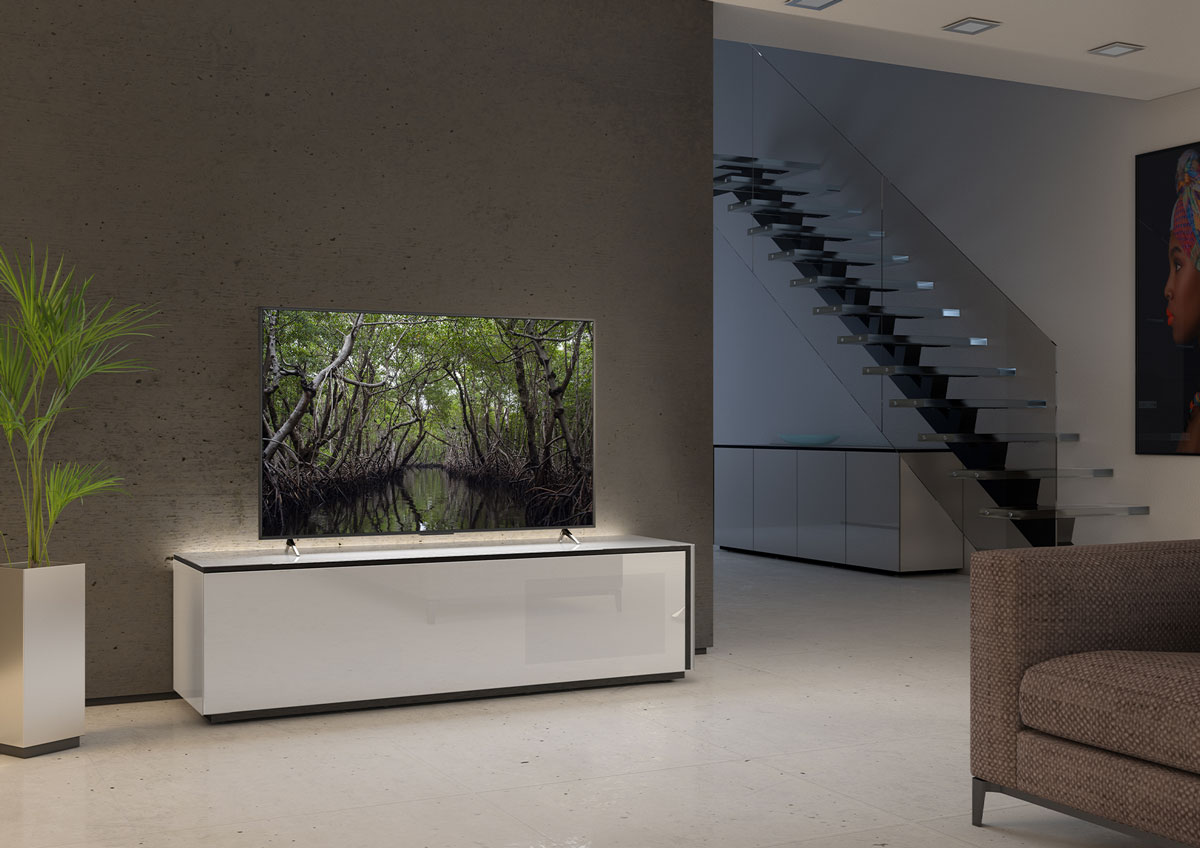
Your moments of relaxation in front of the TV, to watch a film, a match or the series you love most, or to play your favorite video game, perhaps online with your friends, are a ritual that you dedicate to yourself, at the end of a day at work or during the weekend, that you can keep for yourself or share with whoever you want.
In any case, the time you spend in front of your TV screen helps you recharge your batteries and “disconnect” from the daily grind: this is why enjoying maximum comfort in these moments becomes very important, and correct lighting in your TV area can help you significantly achieve this!
Why is the correct ambient lighting important for watching TV in maximum comfort?
Without going into “scientific” questions, we must first realize that the eye’s field of vision is wider than the surface of the TV screen: this is naturally more accentuated the smaller the screen, but it is also true for medium/large sizes (55” or 65”).
If we watch TV in a poorly or completely unlit environment, it will inevitably generate reflections on the objects surrounding it (walls, furniture, etc.); these reflections obviously change depending on the moving scenes we are watching, thus creating ever-changing lighting in the space of a few moments.
If – in fact – our field of vision “captures” these reflections that are constantly changing, our eyes are attracted by them, generating fast movements (and imperceptible to our senses) that tire them out in the space of a few dozen minutes and consequently take away much of the comfort of our vision.
To understand this better, let’s just think about the cinema: here the screen is so large that it occupies our entire field of vision, without “external” reflections: this certainly makes watching a film at the cinema much more engaging, but also more relaxing and comfortable.
So, how can we avoid straining our eyes while watching TV at home?
Apart from the lucky few who can afford a cinema at home, the best remedy is correct ambient lighting.
There are some “little rules” that are good to follow to ensure the best result:
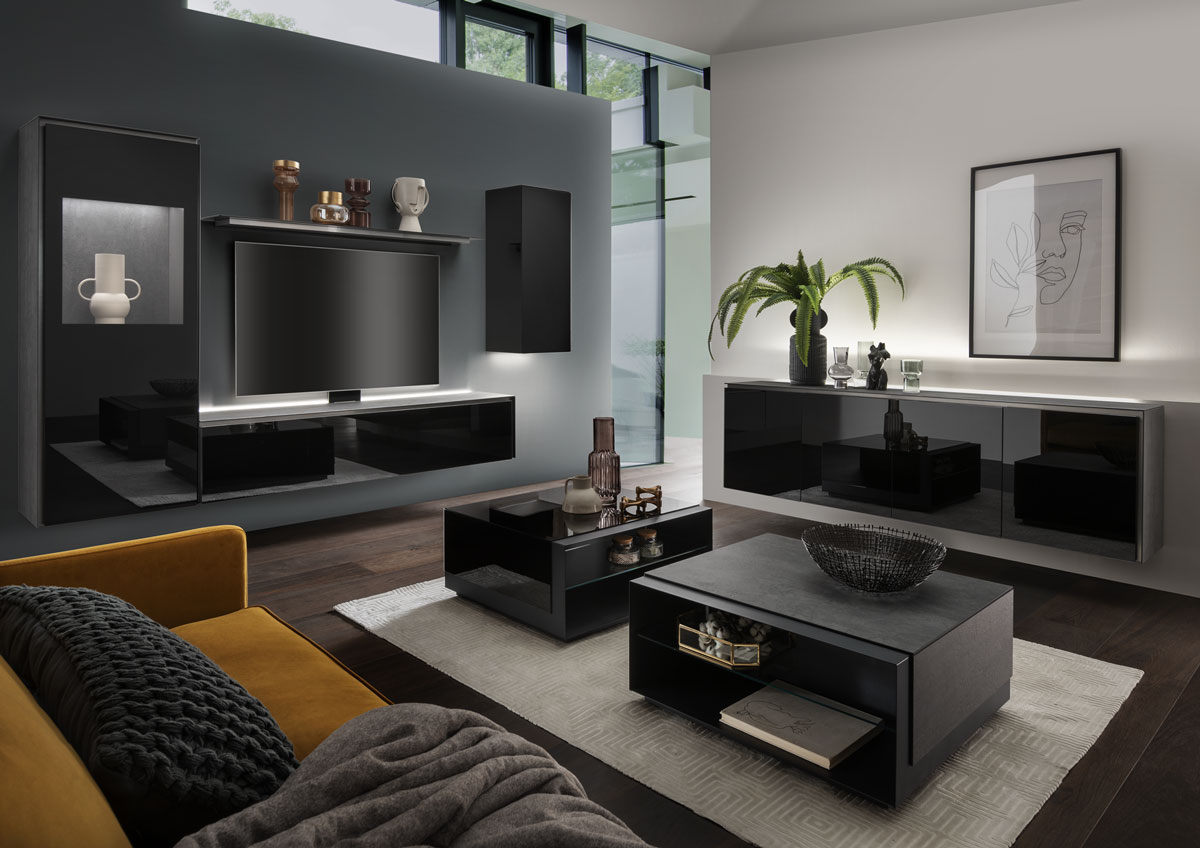
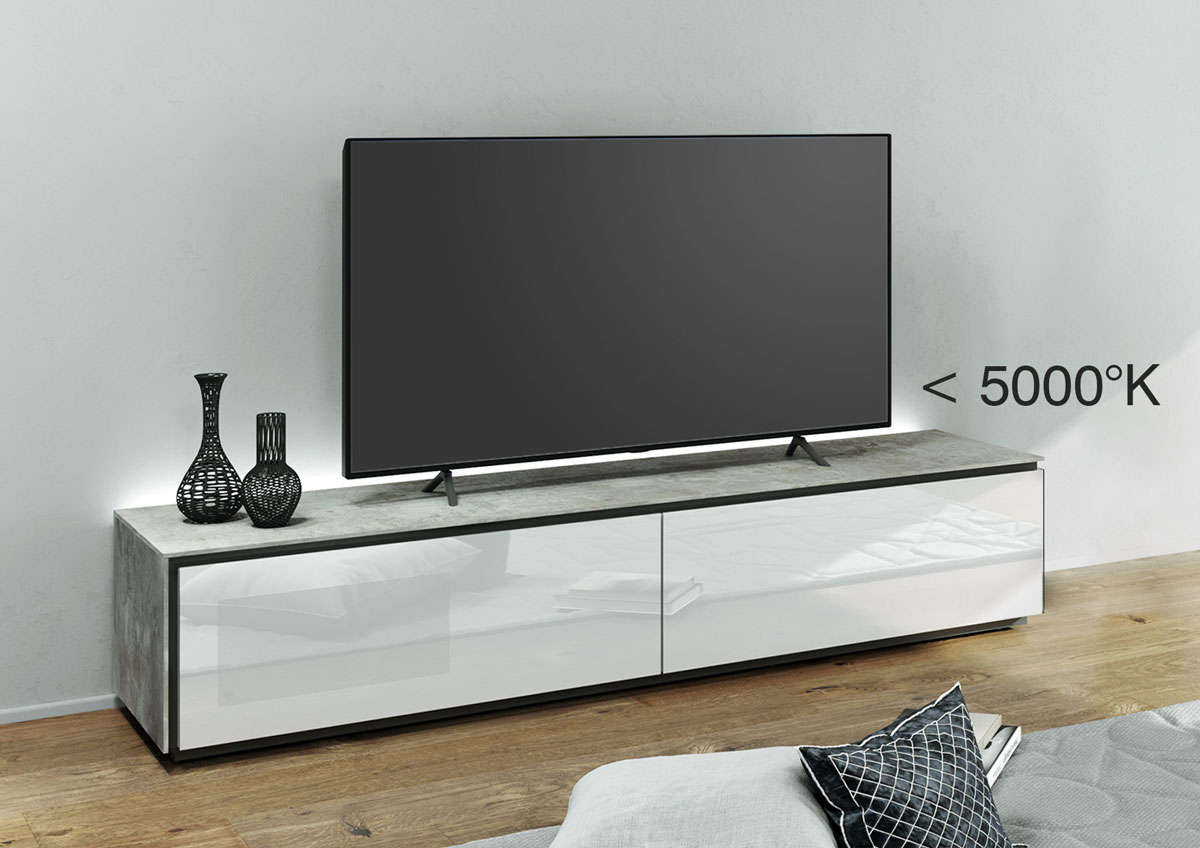
- The lighting should preferably come from behind the TV screen, so as to create a “halo” around it that eliminates all disturbing reflections. Of course, other positions can also help, such as using lamps next to the TV (the important thing is that the light is not pointed directly at our eyes!), but they would be less effective.
- The lighting should possibly be diffused, so as not to create defined points of light that could capture the attention of our eyes.
- The intensity of the lighting should be such as to eliminate reflections without “becoming the protagonist”, in particular without flattening the color contrast of the images on the screen. The ideal would be to be able to adjust the brightness, so as to find the level that we like best.
- Regardless of personal taste, a “warm” or “neutral” light (possibly with a temperature no higher than 5000 °K) maximizes comfort, because in addition to eliminating disturbing reflections, it creates particularly relaxing lighting.